The Importance of Educating Young Children of Sun Safety Practices
6 comments Posted by Sun Safety Alliance at 11:02 AM |
| From Sun Safety Alliance Photos |
Epidemiologic data suggest that several skin cancers can be prevented if children and adolescents are protected from UV radiation. Schools can participate in reducing exposure of young persons to UV radiation from the sun during school-related activities by offering education and skill-building activities to reinforce the development of healthful behaviors. School-based efforts to prevent skin cancer can be more effective in the framework of a coordinated school health program that includes family and community participation and builds on the context and current practices in the school and community. Coordinated school health programs aim to create and support environments where young persons can gain the knowledge, attitudes, and skills required to make and maintain healthy choices and habits. These programs integrate health education, a healthy school environment, physical education, nutrition services, health services, mental health and counseling services, health promotion programs for faculty and staff, and efforts to integrate school activities with family and community life.
 |
| From Sun Safety Alliance Photos |
Being aware of existing practices for sun exposure and sun protection among teachers, staff, and students might help define gaps in optimal sun-safety practices. Careful observations for a few days might also provide important information concerning students' use of shade areas and sunscreen at recess or lunch time, and staff's use of hats, shirts, and sunglasses. Discussions with students and staff who practice sun-safe behaviors might prove useful in planning and improving implementation of sun-safety practices.
 |
| From Sun Safety Alliance Photos |
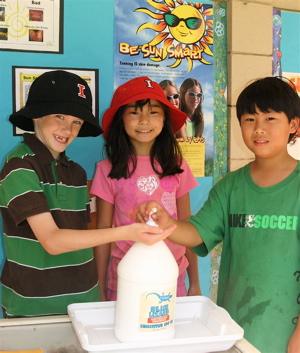
Skin cancer prevention measures vary in both their ease of adoption and relevance. Schools should not allow an "all or nothing" approach to undermine the effectiveness of their skin cancer prevention efforts. For sun-safety protection, a short-sleeve shirt and cap might be better than no hat and a sleeveless top. Being flexible is important while moving in the direction of optimal skin cancer prevention environments, policies, and programs.
 |
| From Sun Safety Alliance Photos |
Susan Lucy: "Basal Cell Carcinoma Affects Approximately One Million Americans Each Year"
168 comments Posted by Sun Safety Alliance at 7:33 AM Susan Lucy, is a beach body coach. She loves to work out, eat healthy, and stay fit. Susan is a mom. She is a blogger, a tweeter...
Susan has skin cancer.
Read her story about being diagnosed with basal cell carcinoma.
Sun - Friend or Foe???
by
Now, I don't have the really bad kind - melonoma. I have Basal cell carcinoma (BCC), which is the most common form of skin cancer, affecting approximately one million Americans each year. In fact, it is the most common of all cancers. More than one out of every three new cancers are skin cancers, and the vast majority are basal cell carcinomas. These cancers arise in the basal cells, which line the deepest layer of the epidermis (top skin layer).
 |
| From Sun Safety Alliance Photos |
I am very good about going to the Dermatologist. My grandfather did die of Melonoma at 50 and I have a lot of moles and freckles. So once a year, I subject myself to a full body scan by my Dermatologist. I have had a few mysterious looking moles taken off but all in all, I get a clean bill of health and the "wear suncreen and I will see you next spring" speech. This time though, I had two red patches on my right shoulder and back that I had noticed over the winter and thought they were most likely eczema. When my dermatologist told me that she didn't like the look of them and wanted to biopsy, I knew they were probably cancer or at least pre-cancerous. When I called the office for results and they told me that the doctor would call me back, I really knew. That is never a good sign.
Anyone with a history of sun exposure can develop basal cell carcinoma. However, people who are at highest risk have fair skin, blond or red hair, and blue, green, or grey eyes. Those most often affected are older people, but as the number of new cases has increased sharply each year in the last few decades, the average age of patients at onset has steadily decreased. The disease is rarely seen in children, but occasionally a teenager is affected. Dermatologists report that more and more people in their twenties and thirties are being treated for this skin cancer. Men with basal cell carcinoma have outnumbered women with the disease, but more women are getting basal cell carcinomas than in the past.
 |
| From Sun Safety Alliance Photos |
Basal cell carcinomas are easily treated in their early stages. Although this skin cancer seldom spreads, or metastasizes, to vital organs, it can damage surrounding tissue, sometimes causing considerable destruction and disfigurement — and some basal cell carcinomas are more aggressive than others.
I have two options for treatment:
EXCISIONAL SURGERY
After numbing the area with local anesthesia, the physician uses a scalpel to remove the entire growth along with a surrounding border of normal skin as a safety margin. The skin around the surgical site is then closed with a number of stitches, and the excised tissue is sent to the laboratory for microscopic examination to verify that all the malignant cells have been removed. The effectiveness of the technique produces cure rates around 90 percent.
 |
| From Sun Safety Alliance Photos |
CURETTAGE AND ELECTRODESICCATION
Using local anesthesia, the physician scrapes off the cancerous growth with a curette (a sharp, ring-shaped instrument). The heat produced by an electrocautery needle destroys residual tumor and controls bleeding. This technique may be repeated twice or more to ensure that all cancer cells are eliminated. It can produce cure rates approaching those of surgical excision, but may not be as useful for aggressive basal cell carcinomas or those in high-risk or difficult sites.
 |
| From Sun Safety Alliance Photos |
Because my cancer is superficial, I am planning on the latter option because the recovery is quicker and I won't need stitches. I still will have two circular scars as opposed to a linear one but I can deal with that. This cancer developed in the last year. Had I not had yearly checkups, I may not have had this option.
People who have had one basal cell carcinoma are at risk for developing others over the years, either in the same area or elsewhere on the body. For the next year, I will have to go back every 3 months to make sure more cancer does not develop in other areas.
I didn't post this note for pity but rather to hopefully educate people about the importance of having yearly skin checks with a dermatologist.
I am also using this as a learning lesson for my kids who give me grief all the time about wearing sunscreen. The damage on me was done years ago. 85% of sun damage is done by the time you are 18 years old. I have taken pictures of my shoulder and back biopsy sites and have talked extensively to them about wearing sunscreen. They have never had a sunburn but as they get older, they are more resistant to my insistence that they apply it every time they go out in the sun. We have a house on Cape Cod so it is virtually impossible for us to stay out of the sun. Hopefully, they will learn from my experience.
 |
| From Sun Safety Alliance Photos |
Be well,
Susan
 |
| From Sun Safety Alliance Photos |
Lisa Carey Shares Sun Safety Tips For Man's Best Friend
0 comments Posted by Sun Safety Alliance at 1:37 AM
Lisa Carey, an award winning freelance writer, has worked with families volunteering and professionally for 20+ years. She shares with her readers a variety of topics important to families. E-mail Lisa with your questions about families and Houston. She recently wrote the following article for the Los Angeles eXaminer.
 |
| From RIP |
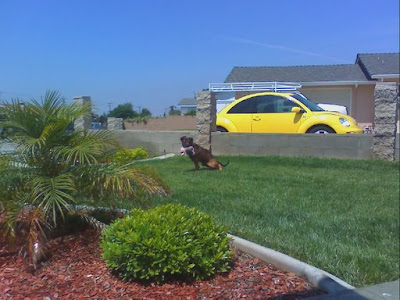
Pets are people too, well in many families they are. During the hot summer months it is important to not only provide sun safety for your people family but pets too. Pets too can become victims of heat stroke and heat exhaustion. In Heat related illnesses we talked about keeping your family safe, now learn how to keep your pet safe from the sun.
Tips for keeping your dog safe in the sun
Never leave your pet in the car. On July 2, 2009, two police dogs died after being left in police cruisers during Britain’s heat wave.
Watch the amount of time you leave your dog outside. If you dog must remain outside or is a pet that lives outside make sure you do the following:
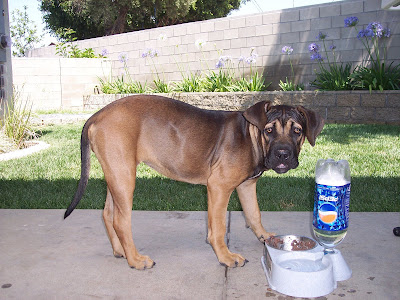
- have water available at all times using a container that cannot be tipped over.
 |
| From RIP |
- start with ice chips so they don’t gorge on water they also enjoy the “treat.”
 |
| From RIP |
- provide your pet with a shaded area to rest and stay safe from the sun.
 |
| From RIP |
- if possible allow your pet to play in the sprinkler or swimming pool.
 |
| From RIP |
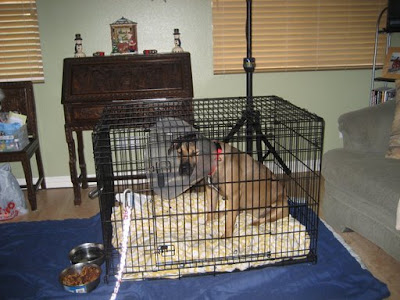
- if using a crate make sure it is wire so it is open to the breeze.
 |
| From RIP |
- if using a chain make sure they can’t tie or twist themselves up around the post or tree which eventually keeps them away from the shade and water they so badly need.
 |
| From RIP |
- when traveling, walking or visiting with your pet outdoors bring along a water spray bottle and spray his foot pads, stomach and back for relief.
 |
| From RIP |
Have your dog shaved or groomed to have shorter hair during the summer months when “hot spots” are more likely to occur. Hot spots or open, oozing sores on your dogs skin that can occur as a result of matted or heavy hair and moisture build up. The dog will scratch and nibble at it to get relief actually making the sores much worse.
Some animals, just like people are more susceptible to the heat such as those with short noses, darker coats, thicker coats, puppies and older pets. Be aware of their special needs and circumstances.
Symptoms of heat stroke and heat exhaustion in pets include:
- panting more than normal
- blue or white tongue and bright red gums
- staggering around
- weak
- vomiting or diarrhea
- non responsive
Heat stroke and heat exhaustion is just as deadly in pets as it can be in humans. If you dog is exhibiting any of these symptoms or a combination of them get to the veterinarian immediately. Cool the dog with the use of immersion in tepid water or hose him off, gently. Take your pet into air conditioning, wet this tongue and place cool, wet towels around him until you can get professional treatment. Cooling too fast can be a problem, so be sure not to use cold or ice water. Just like with your family, your family pet’s first line of defense against sun damage and heat related illness is prevention and care.
 |
| From RIP |
This post is dedicated to "B", the rottweiler bullmsatiff of Covina, California. January 2008 - June 2009. May you RIP.
Sun Safety for Infants, Babies, and Toddlers: By the Skin Cancer Foundation
2 comments Posted by Sun Safety Alliance at 9:16 AMStory for the media from the Skin Cancer Foundation

From Sun Safety Alliance Photos
New York, NY (July 1, 2009) – Just one blistering sunburn in childhood more than doubles a person’s chances of developing melanoma later in life. According to one US study, 54 percent of children become sunburned or tanned in their second summer, versus 22 percent in their first.
“Children should not be getting sunburned at any age, especially since there are a range of very effective sun protection methods that can used,” said Perry Robins, MD, President, The Skin Cancer Foundation. “Parents need to be extra vigilant about sun protection all the time.”
Many parents don’t know the best ways to protect their young children. Below are The Skin Cancer Foundation’s recommendations.
Infants

From Sun Safety Alliance Photos
- 0-6 months: Infants under 6 months of age should be kept out of the sun. Their skin is too sensitive for sunscreen. An infant’s skin possesses little melanin, the pigment that gives color to skin, hair and eyes and provides some sun protection. Therefore, babies are especially susceptible to the sun’s damaging effects.
- Use removable mesh window shields to keep direct sunlight from coming in through the windows of your car or invest in UV window film, which can screen almost 100 percent of ultraviolet radiation without reducing visibility.
- Take walks early in the morning before 10 AM or after 4 PM and use a stroller with a sun-protective cover.
- Dress baby in lightweight clothing that covers the arms and legs.
- Choose a wide-brimmed hat or bonnet that protects the baby’s face, neck, and ears. A baby who wears a hat during the first few months will get used to having it on.
Babies

From Sun Safety Alliance Photos
- 6-12 months: It’s now safe to use sunscreen on babies.
- All the protection methods explained above still apply, however now sunscreen use should be incorporated.
- Apply a broad-spectrum, SPF 15+ sunscreen to areas left uncovered such as baby’s hands. Many companies have tear free formulas that won’t sting baby’s eyes.
- Most importantly, sunscreen must be applied 30 minutes before going outside and reapplied every two hours or after swimming or excessive sweating.
Toddlers/Pre-School Age

From Sun Safety Alliance Photos
- Protecting toddlers from the sun requires a little more thought and effort. It is important to educate your child and caregivers.
- Make sure your child seeks the shade between 10 AM and 4 PM. Check the outdoor area where your child plays to make sure there is adequate shade.
- Make sure toddlers are covered. Long-sleeved, unbleached cotton clothing is cool and comfortable, while also highly protective. Clothing with an Ultraviolet Protection Factor (UPF) listing on the label offers extra security. The Skin Cancer Foundation recommends clothing with a UPF of 30 or higher.
- Don’t forget hats and sunglasses. Choose a wide-brimmed hat that protects face, neck, and ears.
- Water-resistant, spray-on sunscreens are a good choice for toddlers who won’t sit still. Look for sunscreens with an SPF 15 or higher with some combination of the following UVA ingredients: avobenzone, ecamsule (a.k.a. Mexoryl™), oxybenzone, titanium dioxide and zinc oxide
 |
| From Sun Safety Alliance Photos |
“With a little effort and planning, it’s easy for young children to enjoy the outdoors safely,” said Dr. Robins. “Parents need to make it a priority and to also lead by example.”
Now celebrating its 30th year, The Skin Cancer Foundation is committed to educating the public and medical professionals about sun safety. As leaders in the fight against skin cancer, the Foundation is the only global organization solely devoted to the prevention, detection and treatment of the world’s most common cancer. The mission of the Foundation is to decrease the incidence of skin cancer through public and professional education and research.
Roniette Libedinsky of the Los Angeles Examiner recently reported on the importance of protecting oneself from the sun, even on cloudy days.
The following is quoted from Examiner.com
Not only do clouds not block UV radiation, but they often magnify the effects of radiation because UV rays can be redirected and magnified by clouds. For example, the weather forecast for today, June 2nd, calls for mostly cloudy and scattered showers. Yet the UV index is estimated to be in the high exposure category (7 on a scale of 0-11).
.jpg) |
| From Sun Safety Alliance Photos |
Exposure to UV rays is a risk factor for skin cancer, but luckily, this is one factor that can be easily controlled.
• Use a sunscreen with an SPF of 15 or higher. SPF is a measure of the amount of sun exposure you’re protected from; it’s not related to the time of sun exposure.
For example, you might get the same amount of sun exposure during 15 minutes at midday as you would get during 1 hour in the late afternoon. Therefore, wearing a sunscreen with an SPF of 15 does not mean that you can be in the sun 15 times as long as you would normally be before burning.
• Use plenty of sunscreen.
|
| From Sun Safety Alliance Photos |
Many people don't get maximum protection from sunscreens, because they don't use enough of it. About 1 ounce is needed to cover all your exposed parts. Many sunscreens come in about 4 ounce bottles, so about one quarter of the bottle should be used.
Apply sunscreen about 30 minutes before going out and re-apply every 2 hours.
• Choose a sunscreen that offers protection against both UVA and UVB radiation.
 |
| From Sun Safety Alliance Photos |
UVB radiation (280–315nm) damages the skin’s outer layers and is responsible for sunburns and skin cancer. UVA radiation (315–400nm), which penetrates deeper into the skin, is responsible for photoaging (wrinkles) and can also cause skin damage that leads to cancer.
Look for broad-spectrum sunscreens with sulisobenzone, avobenzone (Parsol 1789), ecamsule, titanium dioxide or zinc oxide in the ingredients.
And don’t forget to drink plenty of water.
 |
| From Sun Safety Alliance Photos |
Skin is the body’s largest organ, and it protects us from heat, injury and infection. Not replenishing it with much needed water can lead to unhealthy skin that cannot as readily protect us from the elements.
Sun Safety Activities: Middle School and High School
1 comments Posted by Sun Safety Alliance at 1:12 AM |
| From Sun Safety Alliance Photos |
Skin cancer is America’s fastest growing health epidemic. This year, more than 1.2 million new cases of skin cancer will be diagnosed, more than all cases of breast, lung, prostrate and colon cancer combined. Most people do not know that skin cancer is deadly –claiming one life every hour.
 |
| From Sun Safety Alliance Photos |
Melanoma is increasingly affecting young adults. This correlates with the rise in use of indoor tanning facilities over the past two decades. Overexposure to UV radiation is an important health issue for all skin types.
 |
| From Sun Safety Alliance Photos |
Effects of overexposure, in addition to cancer, include sunburn, dehydration, dry skin, wrinkles, eye damage, and scarring due to skin cancer. Always remind your young teens and young adults that although they are not babies, they should still make an effort to protect themselves from powerful UV rays:
 |
| From Sun Safety Alliance Photos |
- Avoid peak hours when UV rays are most harmful (10:00 AM-4:00 PM)
- Stay in the shade
- Avoid tanning beds and sun lamps
- Wear cover-up clothing
- Wear a hat
- Wear UV protective sunglasses
- Apply sunscreen
- Check UV, heat, and air quality indexes
- Drink plenty of water
- Practice sun safety every day, all year long
 Download an activities sheet for middle schoolers here Download an activities sheet for high schoolers here |
Fresh air, sunshine, and exercise are essential to the healthy development of young children. Children who regularly spend time running, jumping, and playing outdoors are generally more fit and have a lower risk of being overweight. Adults should encourage children to be outside, active, and safe – including sun-safe.
The main message for young children is “Your skin protects you. You should protect your skin.” For children in grades K-2, these activities focus on actions and decisions that children can make themselves – such as seeking shade. For children in grades 3-5, these activities integrate language, math, and science skills with sun-safety information. Sun safety education should promote informed decision making skills and life-long health habits.
Download an activities worksheet for grades K-2 here
Download an activities worksheet for grades 3-5 here
 |
| From Sun Safety Alliance Photos |
Sun-safety education should be modeled and talked about while incorporating it into daily routines for infants and toddlers. Language and action together can introduce the concept of taking care of the body.
The following learning activities are included in this section:
Wearing Clothing
Hats Galore
Fun and Sun Glasses
Shade Play
Wearing Sunscreen
Sun Safety Song
 |
| From Sun Safety Alliance Photos |
The main message for infants and toddlers is “Your skin protects you. I will help you protect your skin.” Begin to introduce the idea of “You should protect your skin." To toddlers, who are typically in the stage of autonomy (“Do it myself!”).
While learning about sun safety, infants and toddlers hear new vocabulary words and see that you protect them. Teaching sun safety provides opportunities for toddlers to begin developing skills such as communication, self-help, fine motor, and gross motor.
Children learn by example, so adults should practice sun-safety every day. Include infants and toddlers to the degree that they are ready. Infants need frequent and caring communication and toddlers need many opportunities for physical activity and independence.
Download an activities sheet for infants and toddlers here
 |
| From Sun Safety Alliance Photos |
It's natural to enjoy all kinds of outdoor activities! The Sun Safety Alliance (SSA) encourages you to be safe by following these sun-safety tips year-round to help prevent serious skin damage—and possibly skin cancer—later!
- Keep in mind the sun is strongest between 10 am and 4 pm.
- Wear clothing that's dark and tightly woven.
- Wear a wide-brimmed hat and sunglasses.
- Remember that UV rays bounce off sand, snow, concrete, and water.
- Do not use sun tanning beds.
- Keep very young children (6 months or less) out of the sun.
- Sunscreens need to be applied liberally and evenly over all exposed areas.
- Apply a sunscreen with a SPF of 15 or higher whenever you're outdoors. To achieve adequate UV protection you should use products that provide broad spectrum protection, which means protection against both UVB and UVA rays. For broad spectrum protection, look for products that provide an SPF of at least 15 and contain ingredients like Avobenzone (Parsol 1789) or zinc oxide.
- For children, the SSA recommends sunscreen with an SPF 30 or higher.
- Apply sunscreen before going outdoors and reapply often.
- Reapply sunscreen after swimming, perspiring, and toweling off.
- Provide complete sunscreen coverage for your skin (including neck, ears and lips!).
- For people with thin or thinning hair, apply sunscreen to the scalp as well.
- And rememberstay in the shade whenever possible!


